
Montana’s Ridiculous Size
People always talk about how big Montana is. Fair enough. The state covers about 147,000 square miles. Now, I didn’t do the math myself, but I’ve heard it enough times from enough folks that I believe it: Montana’s big enough to fit Delaware, Pennsylvania, Maryland, Virginia, and Washington D.C. inside its borders. Some folks say it fits all six easily, depending on how you measure it. Either way, you get the idea—this place is massive.
To put it in perspective, Montana is larger than Germany. Larger than Japan. Larger than the entire United Kingdom. Yet the population is only about 1.15 million people. That means you can drive for hours and see nothing but mountains, valleys, and sky. Which, if you ask me, is exactly how it should be.
Beaverhead County: The Biggest County You’ve Never Heard Of
If Montana’s already huge, then Beaverhead County is proof that someone wasn’t paying attention when they drew the lines. Located in southwestern Montana, Beaverhead County covers 5,542 square miles—making it the largest county in the entire state. That’s bigger than Connecticut. That’s bigger than Delaware.
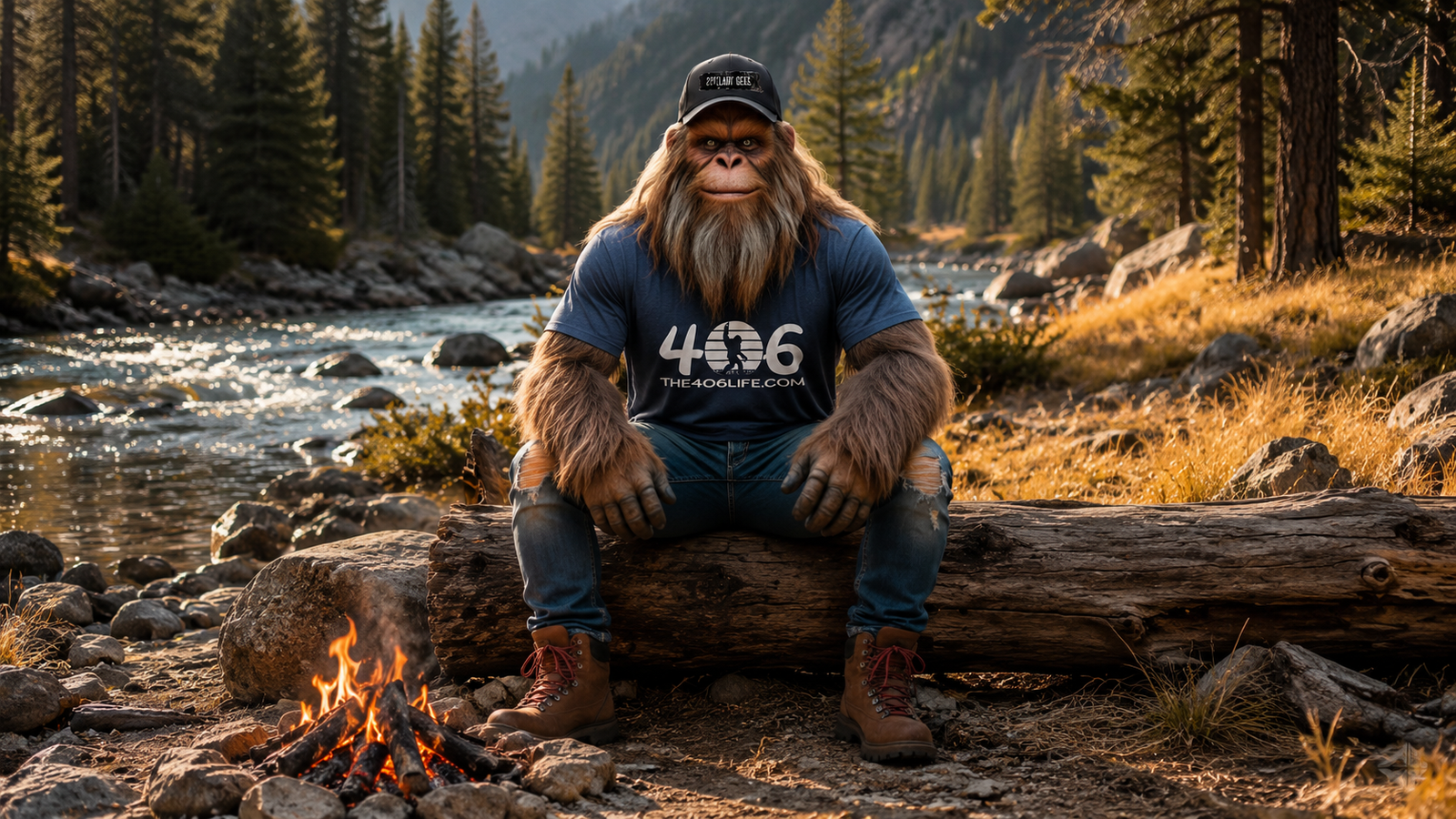
The county seat is Dillon, a town of about 9,500 people. Imagine being responsible for an area the size of a small state with fewer people than a mid-sized suburb. The county’s named after a rock formation along the Jefferson River that supposedly looks like a beaver’s head. I’ve looked at it. The resemblance is there if you squint and tilt your head just right. Bigfoot perspective, not always the most reliable.
Montana’s Temperature Records: When Weather Goes Extreme
The Coldest Spot in the Lower 48
On January 20, 1954, at Rogers Pass near Helena, the temperature dropped to -70 degrees Fahrenheit. That’s the coldest temperature ever officially recorded in the contiguous United States. Forty-eight states, and Montana holds the record. It’s been over seventy years, and nobody’s touched it.
The conditions were brutal. Snow had been falling almost continuously for a week. The temperature had only risen to -18 degrees by afternoon. Then the sun set, the sky cleared, and the cold just… fell. Miners at a nearby camp recorded the reading. That record sits on a historical marker near the pass today, a frozen reminder of what winter can do when it really tries.
The Wildest Temperature Swing on Earth
If you want to see Montana weather go absolutely insane, look at what happened in Loma, a small town near Great Falls. On January 14-15, 1972, the temperature rose 103 degrees in just 24 hours—from -54 to 49 degrees Fahrenheit. That’s not a typo. One hundred and three degrees in one day.
Chinook winds screaming down from the mountains caused it. The air was so warm it felt like spring. Then the system moved out. The contrast was so violent that it set a world record—not just a U.S. record. A world record for the largest 24-hour temperature change ever measured. The folks in Loma still talk about it.
The Snowflake That Broke Reality
In January 1887, near Missoula, something happened that still seems impossible. Ranchers reported snowflakes so large they looked “larger than milk pans.” One measurement came in at 15 inches wide and 8 inches thick—a flake bigger than a large pizza. Guinness World Records listed it as the largest snowflake ever recorded.
Now, here’s the thing: a lot of scientists are skeptical. Individual snowflakes don’t usually get that big because they fall apart. What likely happened is that multiple flakes stuck together as they fell, creating one massive conglomeration. But whether it was one flake or many clumped together, the fact remains—something the size of a dinner plate fell from the sky. That’s wild by any measure.
Jeannette Rankin: The First Woman in Congress
In 1916, when most of America still didn’t believe women could vote, Jeannette Rankin of Montana became the first woman ever elected to the U.S. Congress. Not just the first woman senator. The first woman in either house. She won four years before the 19th Amendment gave women the right to vote nationally.
Rankin was a suffragist and a pacifist. She was also fearless. When she took office in 1917, President Woodrow Wilson asked Congress for a declaration of war against Germany. Rankin voted no. She was one of only 50 members of Congress to oppose it. Twenty-four years later, she voted against entering World War II. She remains the only member of Congress to vote against U.S. participation in both World Wars.
People criticized her. Some called her unpatriotic. She didn’t care. She stuck to her principles, and Montana is part of that story.
The Roe River: 200 Feet of Fame
In Great Falls, there’s a river that flows from Giant Springs to the Missouri River. The entire journey takes 201 feet. The Roe River was once recognized by Guinness World Records as the world’s shortest river.
The water emerges crystal clear from the spring, a constant 54 degrees year-round, and it’s deep enough for fishing. Local schoolchildren in the 1980s started a campaign to get it officially recognized. They won. For a while, the Roe held the title. Then Oregon’s D River contested it, and after a measurement dispute (and some creative measuring on both sides), Guinness discontinued the category altogether. But the Roe’s still the shortest by most measurements, and visitors come from around the world to walk its entire length in a minute or two.
The 406: Montana’s Unbroken Area Code
Montana is one of only 11 states that still operates with a single area code. That code is 406. It covers the entire state—all 56 counties, every incorporated city, every rural ranch and mountain community. From Billings to Missoula to Glasgow to the smallest town you’ve never heard of, it’s all 406.
The code was established in 1947 as one of the original 86 area codes in America. It’s never been split. No overlay code has ever been added. Montana’s about 1.15 million people strong, spread across nearly 147,000 square miles, and they all share those three digits. The area code has become part of Montana’s identity. Locals wear it like a badge.
The Border With No Paved Roads
Montana shares borders with five states and two Canadian provinces. Most of those borders have highways crossing them. Most states share paved road connections with their neighbors.
Not Montana and South Dakota. The Montana-South Dakota border is the only U.S. state border with no paved roads connecting the two states. If you want to cross from Montana into South Dakota, you drop south into Wyoming first, then head east into South Dakota. The border itself is remote, unpaved, and practically untouched. In fact, the tri-state marker where Montana, Wyoming, and South Dakota meet sits in a field hours from the nearest city.
Glasgow: The Most Isolated Town in the Lower 48
In northeast Montana, near the Canadian border, sits Glasgow, Montana. Population: about 3,200 people. The nearest city with 75,000 or more people is 4.5 hours away by car. That makes Glasgow the most isolated town of its size in the entire lower 48 states. The Washington Post confirmed it in 2018 after crunching the numbers.
Glasgow was founded as a railroad town in 1887. During World War II, it hosted an Army airfield. When the base left in the late 1960s, Glasgow settled into its current rhythm—small, quiet, and genuinely remote. Ninety-eight percent of Americans live within an hour of some kind of urban center. Glasgow residents live four and a half hours away from one. The town embraces it. Their slogan: “Welcome to the Middle of Nowhere.”
Triple Divide Peak: Water Flowing to Three Oceans
In Glacier National Park, there’s a mountain called Triple Divide Peak. What makes it special is that water from its summit can flow to three different oceans: the Pacific, the Atlantic, and the Arctic.
Rain or snowmelt falling on one side flows west through the Columbia River and reaches the Pacific. Falling on another side, it travels east through the Missouri and Mississippi Rivers to the Gulf of Mexico and the Atlantic. And falling on the northeast section, it flows into Hudson Bay via the Saskatchewan River. Whether Hudson Bay connects to the Atlantic or Arctic depends on who’s measuring, but either way, it’s three major drainages. The National Park Service confirms it, and it’s one of only two such places on the continent.
Giant Springs: 156 Million Gallons a Day
In Great Falls, water emerges from the ground at 156 million gallons per day—one of the largest freshwater springs in the United States. The water comes from the Madison Aquifer, filtered through limestone deep underground. It takes about 26 years for a raindrop to travel from the Little Belt Mountains to Giant Springs.
And it stays at exactly 54 degrees year-round. In winter, the warm water creates a mist that coats the trees in ice, turning the park into a glittering landscape. In summer, the spring stays cool when the surrounding air hits 90 degrees. Lewis and Clark noted it in their journals in 1805, calling it “the largest fountain I ever beheld.” It’s now Montana’s most-visited state park.
Berkeley Pit: A Toxic Lake in the Middle of Town
Near Butte sits the Berkeley Pit, a former open-pit copper mine that operated from 1955 to 1982. Today it’s approximately 1,780 feet deep and filled with 40 billion gallons of acidic water laced with heavy metals—copper, iron, arsenic, zinc, and cadmium.
When mining stopped, they turned off the pumps that had kept groundwater out. Water began filling the pit. It interacted with exposed iron sulfides in the rock, creating sulfuric acid. The pH is so low it rivals battery acid. The water is so corrosive it dissolves boat propellers. Yet somehow, extremophile microorganisms have evolved to live in it—organisms that might hold clues to fighting cancer. It’s actively managed today, monitored constantly to prevent contamination of the surrounding water table. It’s a monument to both Montana’s mining heritage and the price it extracted.
Butte: Copper’s Glory Days
In the late 1800s, Butte was the copper capital of the world. By 1882, just a decade into serious copper mining, Butte supplied 10 percent of all U.S. copper. By 1898, it was producing 41 percent of the world’s copper. From 1905 to 1917, Butte produced between a quarter and a third of all copper on earth.
The city exploded. It went from a few hundred people in the 1870s to nearly 100,000 by 1917—the largest city in the entire Rocky Mountain region. The mines operated nearly 10,000 miles of tunnels. Miners worked around the clock. Butte earned the nickname “The Richest Hill on Earth.” Then the market shifted. Competition increased. By the 1980s, mining was winding down. The boom had busted.
Maiasaura in Space
In 1985, astronaut Loren Acton took a Montana fossil to space. A bone fragment and eggshell from Maiasaura—a duck-billed dinosaur discovered in Montana—flew on Spacelab 2 for an 8-day mission. It was the first dinosaur in space.
Maiasaura, the “good mother lizard,” was discovered in Montana and became the state dinosaur. Thousands of fossils have been found here—adults, juveniles, eggs, and even embryos. It’s evidence of a vast dinosaur colony that lived 76 million years ago when this area was an island in a warm inland sea. Now pieces of it orbit the Earth.
Frequently Asked Questions
Yes. Montana is larger than Germany, the United Kingdom, and Japan. It’s roughly the same size as Spain. Yet its population is only around 1.15 million—less than the city of Phoenix.
Yes. The trail is accessible from Going-to-the-Sun Road in Glacier National Park. The peak sits at 8,020 feet. Park entry fees apply.
You can view it from a designated visitor center, but you cannot swim in it or touch the water. The water is extremely toxic. PitWatch.org provides current information on the site.
Yes. The 406 area code has served the entire state since 1947 and has never been split. It’s one of the defining features of Montana’s identity.
Yes, according to analysis by the Washington Post and the Big Data Institute at Oxford. It’s 4.5 hours by car from the nearest city of 75,000+ people, making it statistically the most isolated town of its size in the contiguous United States.
Sources
Montana Kids: Geography and Maps — Montana’s total area and size comparisons
Wikipedia: Beaverhead County, Montana — County area and history
KTVH: Montana’s Wild Weather Records — Rogers Pass and Loma temperature records
University of Montana: Montana’s -70 Below — Detailed account of Rogers Pass 1954
Guinness World Records: Largest Snowflake — Missoula 1887 snowflake record
History.com: Jeannette Rankin Becomes First U.S. Congresswoman — 1916 election and Congressional history
Wikipedia: Roe River — World’s shortest river
All Area Codes: 406 Area Code — Montana’s single area code history
Classic City News: Glasgow, Most Isolated Town — Washington Post analysis
National Park Service: Glacier’s Continental Divide — Triple Divide Peak information
Visit Montana: Giant Springs State Park — Spring flow and facts
PitWatch: Berkeley Pit Official Information — Current status and management
Western Mining History: Butte, Montana — Copper mining history and production statistics
Enchanted Learning: Maiasaura — Dinosaur facts and space mission
Leave a Reply
You must be logged in to post a comment.