
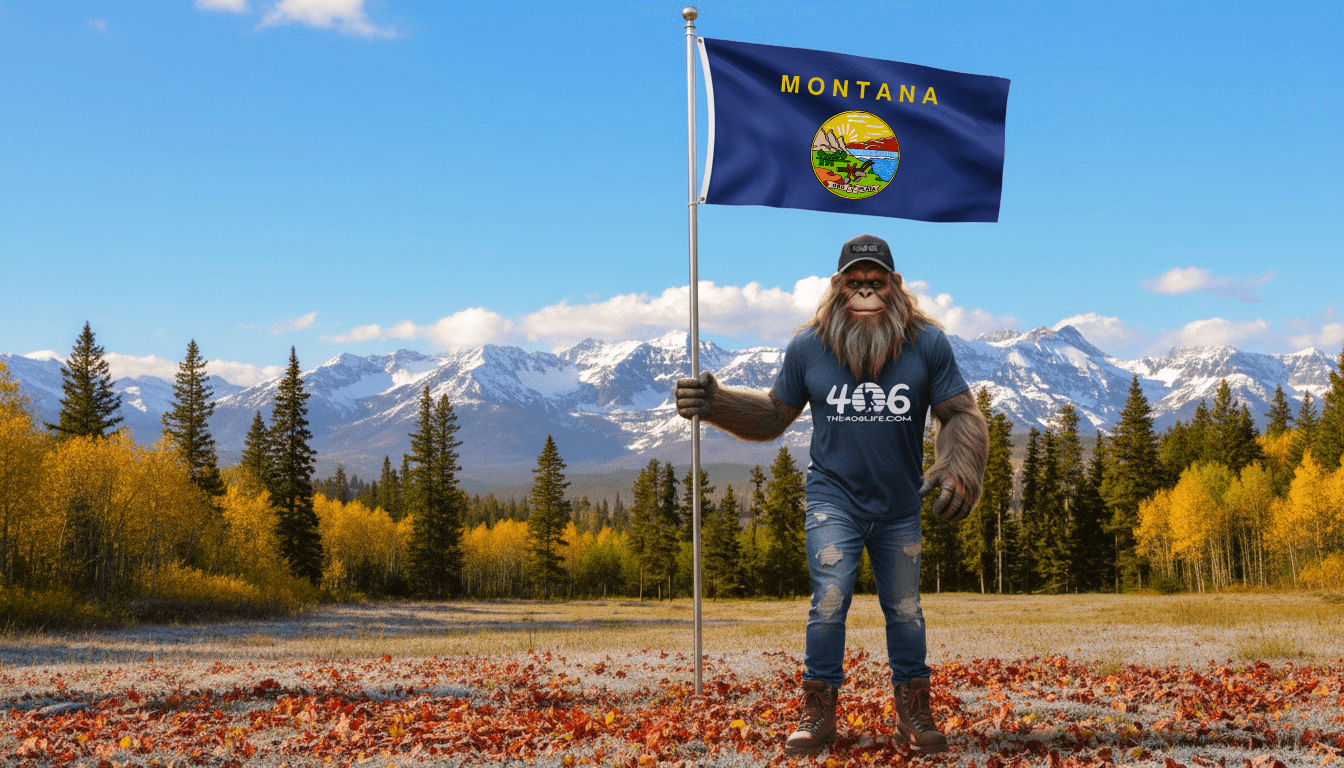
HAPPY BIRTHDAY MONTANA!
A Land Passed Around Like a Hot Potato
Before Montana ever dreamed of statehood, this land got shuffled around like a deck of worn-out playing cards. One year it was part of the Louisiana Territory, then Missouri, then Nebraska, then Dakota—seems like the only constant was confusion. The western half came through the Oregon Treaty of 1846, which swapped land from Great Britain to the U.S. If you ever thought Bigfoot had trouble remembering birthdays, imagine trying to figure out what government you lived under back then!
By the 1860s, gold fever hit like a late spring blizzard. Miners stampeded in, hoping to strike it rich in Bannack, Virginia City, and Helena. Suddenly, those wild hills needed law and order, and not just the kind that comes from a six-shooter. The U.S. government created Montana Territory in 1864 to bring some sense to the chaos.
Still, it wasn’t all huckleberry pie. Federal bosses in far-off Washington, D.C. kept tight reins on the territory’s wallet and leadership. Folks in Montana could elect a delegate to Congress, but he couldn’t actually vote. Imagine showing up to a barbecue and not getting a plate—yep, that’s how Montanans felt. That itch for self-rule kept getting worse, especially when local tax dollars kept flowing out of state. For a quarter-century, Montanans schemed, dreamed, and bickered their way toward statehood.
Gold, Copper, and a Town Called Butte
Gold was the first lure, but Montana’s real jackpot came from copper—glorious, shocking, red-streaked copper. Prospectors in Butte went from digging shallow pits to burrowing deep enough to find enough copper to wire up a continent. Suddenly, the “Richest Hill on Earth” was churning out more copper than a dozen other places combined. If you had a telephone, a telegraph, or electric lights, odds are Montana copper helped make ‘em work.
The copper boom made Butte, Helena, and Anaconda rich—and wild. Millionaires popped up faster than ground squirrels in spring. Helena, for a spell, had more millionaires per person than any place in America. Meanwhile, sawmills and railroads kept humming to serve the mines. Ranchers—cattle and sheep alike—rushed to feed the booming towns, turning grassland into a sea of beef on the hoof. Those open ranges, free to anyone with a fence and some grit, were soon filled with the sound of spurs and bawling calves.
Enter the Copper Kings—Big Money, Big Problems
Now, about those millionaires… you couldn’t throw a rock in Butte without hitting a Copper King (not that I’d recommend throwing rocks at them). Marcus Daly, William A. Clark, and F. Augustus Heinze were the biggest names. They built railroads, banks, and even entire towns. Their money and ambition steered Montana’s future—but so did their backroom deals.
William Clark was notorious for buying influence, stuffing ballots, and, when all else failed, handing out plain ol’ bribes. In fact, he once handed each legislator an envelope with “a little encouragement” inside—enough to fill a lot of coffee cans. Clark even bought up newspapers, using them to sling mud at his enemies and shine up his own image. Marcus Daly, meanwhile, poured cash into the other political side, and their rivalry nearly split the state. The U.S. Senate investigated all this dirty dealing, calling Montana’s early politics “thoroughly corrupt.” It was like a soap opera—except everyone was covered in mine dust and whiskey.
Cowboys & Ranchers: Heart and Backbone of Big Sky Country
If you want to find the true spirit of Montana, look for the folks riding fence lines at sunrise or sorting cattle as a storm rolls in. For over a hundred years, Montana’s cowboys and ranchers have been the heart and backbone of this land. They carved out a life where the prairie meets the mountains, wrangling herds through knee-deep snow and fixing fences that never seem to end.
Ranching families taught their kids to ride before they could walk and passed down stories along with saddles and spurs. These folks know the meaning of real work—branding, haying, doctoring calves, and watching the sky for the next weather surprise. Yet there’s more to ranch life than grit.
Community runs deep out here. Neighbors help neighbors, and a handshake still counts. Today’s Montana ranchers might use a smartphone to check the market, but the work ethic, loyalty, and love for the land haven’t changed a lick. Whether you spot a weathered hat in a small-town café or see riders trailing cattle at dusk, you’re looking at the living soul of Big Sky Country.
Writing the Rules—And Breaking ‘Em
When it came time to draft Montana’s first state constitution, Clark was running the show. Not surprisingly, the document did more to protect the business bigshots than the regular folks. But, in a strange twist, it also included strict anti-bribery rules and new ethics language—likely just to convince Washington that Montana could act civilized, at least on paper. The real power, though, stayed with the mighty and the moneyed, and the government stayed stiff and slow.
As the decades rolled by, those old rules got creakier than an abandoned homestead. By the 1960s, folks wanted more openness, more flexibility, and less corporate shadow. So, in 1972, Montana bucked the national trend and rewrote its constitution from the ground up. The new constitution guaranteed government transparency, citizen privacy, and a true right-to-know—finally giving regular Montanans a real say in their own government.
The Real Cost: Montana’s Indigenous Nations
While miners and moguls raced for gold and copper, Montana’s original nations—Salish, Crow, Blackfeet, Northern Cheyenne, Assiniboine, Gros Ventre, and others—faced tragedy. By the 1880s, military campaigns, broken treaties, and starvation had forced most Native communities onto reservations. The bison, their lifeblood, were slaughtered to near extinction—sometimes out of greed, sometimes on purpose, sometimes with government encouragement. No bison meant hunger, poverty, and lost traditions.
The Dawes Act of 1887 made things worse. It divided up reservation lands into tiny plots, then sold “surplus” land to non-Native settlers and companies. In just a few decades, millions of acres left tribal hands. The riches that made Montana the “Treasure State” came at a heavy cost to its first people, whose land, culture, and resources were swept aside for mining, ranching, and railroads.
Celebration and Contradiction: The 1989 Centennial Bash
By the time Montana’s 100th birthday rolled around in 1989, the state had plenty to reflect on—good, bad, and downright weird. The Centennial lasted a whole year, featuring everything from museum exhibits to pageants to special license plates. President George H.W. Bush even declared November 8 as “Montana Centennial Day.”
The highlight? The Great Montana Centennial Cattle Drive—a wild, dusty, 60-mile trek from Roundup to Billings with nearly 3,000 head of cattle, more than 3,000 riders, 200 wagons, and global TV coverage. For a few glorious days, Montana returned to its cowboy roots, trading mining scandals for boots, hats, and open land. The Centennial was a chance to embrace the mythic “rugged rancher” image, giving folks something to celebrate and new stories to pass down.
Modern Montana: Big Sky Pride and New Challenges
Fast forward to 2025, and Montana’s still full of pride—sometimes loud, sometimes complicated. Every year, on Statehood Day, Montanans gather to ring the Centennial Bell and honor the moment they joined the Union. Awards like the Montana History Teacher of the Year highlight the state’s commitment to telling all its stories, including the hard ones.
But that pride isn’t always easy. Montana’s identity walks a line between “Treasure State” (rich in resources) and “Big Sky Country” (vast and wild). Some folks push for growth and development; others fight to protect the land and water. Old conflicts echo in new debates over Native sovereignty, conservation, and small-town survival. For every ranch rodeo and parade, there’s a bill in Helena stirring up fierce argument. That’s the Montana way—keep talking, keep tussling, keep caring.
Montana’s Natural Riches: Blessing and Burden
From the start, Montana’s lifeblood was in what lay beneath its soil and on its rolling prairies. Copper, silver, gold, coal, oil, timber—you name it, we dug it, drilled it, logged it, or grazed it. Towns like Butte, Anaconda, Colstrip, and Libby rose and fell on the boom-and-bust cycles of the natural resource game.
But all that mining, smelting, and logging left scars. The Berkeley Pit in Butte—a gigantic open-pit mine—now holds some of the most toxic water on Earth. Colstrip, built on coal, faces an uncertain future as energy shifts. Superfund sites dot the map, a reminder that wealth and environmental damage often ride in the same wagon.
These days, Montanans are balancing old industries with new ones. Outdoor recreation and tourism bring in billions—hunters, hikers, anglers, and skiers love the same wild places Bigfoot calls home. Public land battles, debates over water rights, and fights over mining permits still grab headlines, proving the story’s far from over.
Small Towns, Big Hearts: The Montana Way
You can’t talk Montana without tipping your hat to its small towns. Places like Choteau, Ennis, Red Lodge, and Shelby—these aren’t just dots on a map, they’re proof that a handful of stubborn, neighborly folks can build something lasting. Whether it’s a high school football game, a pancake breakfast, or a volunteer fire department saving the day, community spirit keeps Montana’s heart beating.
This is a state that values its veterans, its first responders, and those who show up for others. Ranchers plow roads so neighbors can get to the doctor. Volunteer EMTs drop everything when the radio crackles. Local shops sponsor rodeos and parades, and business owners lend a hand, not just a buck.
The Entrepreneur’s Spirit—Still Riding Tall
Montana has always made room for dreamers, hustlers, and folks who don’t like being told what to do. From miners to ranchers, brewers to artists, bloggers to outdoor guides, the state’s entrepreneurs are as diverse as a bigfoot’s diet. It’s not always easy—long winters, long distances, and small markets mean you gotta get creative. But when you succeed, it’s sweeter than huckleberry jam.
Family businesses, nonprofits, and innovative startups help keep small towns alive and cities interesting. These days, folks are blending the old with the new—ranchers livestreaming calving season, brewers naming their IPAs after ghost towns, and outdoor brands working with Native artists. Montana’s spirit of independence and innovation is alive and well, no matter how wild the weather gets.
The Struggle Continues: Pride, Politics, and Possibility
Montana’s legacy isn’t simple. We celebrate our wild places, our cowboy grit, and our freedom to be different. But we also face hard questions about justice, inclusion, and whose story gets told. From fighting for tribal sovereignty and honest government, to wrangling over land and identity, Montanans have never stopped debating what this place should be.
Statehood wasn’t the finish line—it was just another gate on a long, muddy trail. The true spirit of Montana isn’t found in old gold mines or Centennial parades. It’s in the way we keep showing up, keep arguing, keep laughing, and—every so often—agreeing to help each other out, no matter what.
And if you spot a big, hairy fella out in the woods, just tip your hat. Chances are, he’s got some stories too.
FAQ: Montana Statehood—Answers for the Curious (and Hairy)
When did Montana become a state?
November 8, 1889—right before breakfast, if you believe the old-timers.
Why is Montana called the “Treasure State”?
Gold and silver, friend. If you ever find Bigfoot’s stash, let me know.
What was the Great Centennial Cattle Drive?
The biggest, wildest trail ride since the old west. Cows, cowboys, TV cameras—Montana showing off for the world.
What happened to Montana’s Native nations?
They faced loss, forced relocation, and broken promises. Their resilience and culture endure—integral to Montana’s real story.
How does Montana celebrate its history today?
With bells, parades, awards, heated debates, and a stubborn refusal to forget where we came from—or where we’re headed.
Sources (links open in new tab):
- Montana Statehood – Montana Kids
- Montana – Wikipedia
- 1880s Montana – Montana Historical Society
- How and When Montana Became a State – MTBeyond
- The Montana Enabling Act – FindLaw
- Montana Constitution Collection – UM Mansfield Center
- Copper Kings – Wikipedia
- Wild Montana – Unbuckling the Copper Collar
- Montana’s Centennial Cattle Drive
- Montana Indian Country Index – MBPC
- OPI – Indian Education for All
- Berkeley Pit – Wikipedia
- Southwest Montana – Small Towns
- Big Sky Pride – Wikipedia
Wanna keep up with Montana Max and the wild ride that is The 406 Life? Follow us on Instagram for daily snapshots of Big Sky livin’, and join our Facebook crew—both the main page and the group—for local biz shoutouts, behind-the-scenes shenanigans, and real-deal Montana grit. Whether you’re scrollin’ from the mountains or missin’ ‘em from afar, we’ve got a seat ’round the digital campfire waitin’ for ya.
And don’t forget to roam through the rest of our blog, where Montana Max dishes out tales from the trail, cultural deep-dives, and a whole lotta backwoods wisdom.
Leave a Reply
You must be logged in to post a comment.