
Montana Trail Etiquette:
The Rules Every User Needs to Know
Riders, bikers, hikers, and horse folks all share the same trails out here. Most conflicts don’t come from bad intentions. They come from not knowing how it works. Let’s fix that.
I’ve spent a considerable amount of time in the timber, watching people interact on Montana’s trails. Most folks are out there with good intentions. They want to have a good day, see some country, and get home in one piece. That part they usually manage fine.
What they don’t always manage is the space between them and the next person on the trail. The yielding, the signaling, the courtesy of knowing when to slow down and when to wait your turn. That’s where things fall apart — and sometimes, where things get dangerous.
These rules aren’t posted on a sign at most trailheads. But they’re real, they matter, and every user type has a version of them. Here’s the full picture.
Now I’ll be honest about where this one came from. I was passing through Philipsburg not long ago — as I do — and caught wind of a conversation Mayor Anne was having about trail conflicts and the folks who wander out onto shared ground without knowing the first thing about how it works. She’s the kind of person who notices when something’s broken and says so plainly, without a lot of fanfare. Got me thinking it was past time somebody wrote this down in one place. So Anne — this one’s for you. Thanks for the nudge.
The Yield Hierarchy: Who Moves for Whom
Before we get into specifics, here’s the baseline every trail user in Montana should know before they leave the parking lot.
| When you are… | You yield to… | Who yields to you… |
|---|---|---|
| OHV / Side-by-Side Rider | Everyone — hikers, bikers, horses, uphill traffic | Nobody. You’re the lowest on this chain. |
| Mountain Biker | Hikers Horses Uphill traffic | OHV/motorized users (in theory) |
| Hiker / Runner | Horses Downhill yields to uphill | OHV users, mountain bikers (officially) |
| Equestrian | Nobody — horses have universal right of way | Everyone. Full stop. |
| Uphill traffic (any type) | — | Downhill traffic yields to you. Momentum matters. |
Keep that table in your head. Everything else below is just the detail work.
OHV Riders & Side-by-Sides
Motorized users carry the biggest footprint on a shared trail — physically, acoustically, and in terms of what they can do to other users when they get it wrong. That’s why they sit at the bottom of the yield hierarchy and have the most detailed set of courtesy rules. None of it is complicated. It’s just a system, and the system works when everybody knows it.
The Finger Count: How to Talk Without Stopping
When your group meets an oncoming group on a narrow trail, nobody has to shout across the noise or guess at what’s coming. There’s a hand signal system for this, and it’s as close to universal as trail communication gets.
holds 5
holds 4
holds 3
holds 2
holds 1
fist = done
Five fingers means five or more behind you. Count down as you pass. The last rider in the group raises a closed fist — that’s the signal that says “nothing more coming, you’re clear.” The oncoming group does the same going the other direction. Both groups know exactly what to expect, and nobody has to guess.
A note on young riders: kids should learn the system and know what it means when they see it. But hold off on having them signal with one hand until they’ve got enough trail experience to safely take a hand off the wheel or bars. Don’t trade situational awareness for courtesy.
Waiting at Forks and Turns
This is the one that gets skipped most often, and it causes real problems. When your group reaches a fork or a turn-off, the rider who takes that turn needs to stop and wait until the rig behind them makes the same turn. Not slow down. Stop. Wait.
If you don’t wait, the rig behind you blows past the junction, doesn’t see where you went, and now you’ve got a separated group on backcountry ground. If that rider has a breakdown or gets turned around, finding them gets complicated fast. Ten seconds of waiting at a junction prevents all of that.
Never stop on a blind curve or in the middle of the trail. If you need to pause, pull forward until you find a spot where you can safely get off the tread. Stopping in a bad spot creates a hazard for everyone coming behind you.
Dust Courtesy
On a dry Montana trail in July, a side-by-side moving at speed kicks up a dust cloud that can hang in the air for a minute or more. Anyone behind you — whether they’re in your group or another — is eating that. And anyone on foot or on a bike you just passed is eating it even harder.
The rule is simple: when you’re near other users, slow down. One little thrust of the throttle as you pass a hiker or a biker leaves them in a cloud of dust and exhaust. That’s not just inconsiderate — it’s the kind of thing that gets trails closed to motorized use.
Inside your own group, use dust as your spacing guide. If you can’t see the rear differential on the vehicle in front of you, you’re too close. Back off until the air clears, then maintain that gap.
Uphill Has the Right of Way
When you meet an oncoming vehicle on a steep grade and only one of you can pass, the downhill vehicle backs up or pulls over. Always. The rig going uphill may need momentum to crest the climb, and stopping mid-hill on a loose or rocky grade can mean rolling backward with no traction — a genuinely dangerous situation.
That said, use judgment. If there’s a good pullout for the uphill rig right there and backing the downhill vehicle up a long stretch makes no sense, be flexible. The point is to keep the uphill driver from losing their line, not to create a worse problem in the name of the rule.
When You Come Across Horses
Pull to the side. Engine off. Helmet off. Speak out loud in a calm, normal voice. Do it in that order.
The engine-off part matters because a running machine that goes suddenly quiet and then produces a human voice is far less threatening to a horse than a noisy machine that keeps running. The helmet-off part matters because a helmeted figure doesn’t register as human to a horse the way a bare face does. Ask the rider how they’d like you to proceed. Then do what they say — they know their animal.
Pull to the downhill side of the trail if you have a choice. A spooked horse tends to bolt uphill, and you don’t want to be standing in that path.
Space at Montana trailheads is often tight. Unload your rig first, then park — don’t stage in a way that blocks others from maneuvering. If you’re arriving with a group, the first rig takes the spot closest to the trail. Don’t leave your trailer jack-knifed across the lot. Everyone’s got somewhere to be.
Know Your Width
Some side-by-sides run wider than 50 inches. Many ATV-designated trails were not built for them. Before you head out, confirm your rig’s width and verify that the trail you’re planning is designated for your vehicle class. Taking a wide side-by-side down a narrow singletrack doesn’t just make for a tight squeeze — it damages the trailside vegetation and erodes the tread. Check before you go.
Mountain Bikers
Mountain biking access to Montana’s trails is not guaranteed. It’s a privilege that gets maintained — or lost — based on how riders behave when they share trail with other users. That’s not a threat. It’s just how it works. Land managers pay attention to user conflicts, and trails have been closed to bikes before over repeated issues. The etiquette here is as much about protecting access as it is about courtesy.
The Yield Rule, Plainly Stated
Mountain bikers yield to hikers, horses, and uphill traffic. That’s the rule. There are no carve-outs for speed, for trail type, or for how inconvenient it is to slow down. The yield is the yield.
What the yield actually means: slow down, establish communication, be prepared to stop. It does not mean yelling “on your left!” at full speed and blowing through a group of hikers. A fast-moving bike appearing suddenly from behind is startling and dangerous, regardless of how much warning you gave at the last second.
When you pass a hiker or another trail user who steps aside for you, tell them how many more are coming. Say “two more behind me” or “three back.” When you’re riding solo, say “just me.” This lets the person know when it’s safe to step back onto the trail — it’s the same logic as the OHV finger count, just delivered verbally.
Approaching from Behind
This is where most bike-hiker conflicts happen. A mountain bike coming up fast from behind on a trail with ambient noise — wind, water, birdsong — often can’t be heard until it’s too close. The hiker gets startled. Sometimes they step the wrong way. Sometimes they have a dog.
The fix: slow down well before you reach them, announce your presence early, and ask to pass when it’s safe. A bell works. A clear voice works. What doesn’t work is a sharp “on your left!” from six feet back when someone has earbuds in and no idea you’re there. Give them time to process and respond before you’re on top of them.
If another trail user can’t hear you — earbuds, wind, water nearby — get their attention some other way or wait until there’s enough room to pass safely. Passing when they don’t know you’re there is not an option.
Uphill Riders Have Priority
If you’re descending and meet a rider climbing, you yield. The uphill rider is working hard and maintaining momentum. Breaking that momentum on a steep climb can mean a very long walk pushing a bike back up. If there’s room for both of you to pass without either stopping, give the climbing rider the preferred line and make do with what’s left. If there’s not, you stop.
Blind Corners
Announce yourself before every blind corner on a shared trail. A quick “rider!” or a bell ring is enough. This isn’t optional on high-traffic trails — it’s basic collision avoidance. You cannot see what’s around that corner, and neither can whoever’s coming the other way.
On Narrow Singletrack
When yielding on narrow trail, put one foot down on the inside of the trail and lean your bike away from the tread. This keeps both your wheels on the existing surface and prevents widening the trail edge. Getting off trail to give someone room is good instinct, but doing it by driving your tire into the soft shoulder creates erosion and damages vegetation every time someone does it. Keep the wheels on the durable surface.
Some trails have evolved into directional or semi-directional routes by local convention, even when they’re not officially signed that way. A little local knowledge matters. Ask at a local bike shop, check trail apps, or talk to riders coming out when you’re going in. Following local custom isn’t just polite — it prevents head-on encounters on trails where everyone expects traffic to flow one direction.
Hikers
Hikers tend to think of themselves as the low-impact users. And they are, mostly. But low-impact doesn’t mean no rules. There’s still a right way to share trail on foot, and a surprising number of hikers don’t know what it is — especially the parts about who has the right of way and what to do when a horse comes around a corner.
Uphill Has the Right of Way
When you’re descending and meet someone coming up, you yield. Step to the side and let them through. The person climbing is working harder, maintaining a rhythm, and it’s harder for them to stop and restart than it is for you coming downhill.
That said — it’s the uphill hiker’s call. They may want a breather. They may wave you through. If they do, take it and say thank you. The default is that you offer to step aside and let them decide.
On narrow trail, step to the downhill side. That keeps you stable, gives the passing hiker the easier line, and if anyone loses footing, downhill is the safer direction to recover.
Groups Yield to Individuals
If you’re hiking in a large group and you meet a solo hiker or a small pair, the group yields. It’s easier for eight people to organize a single-file pause than for one person to navigate around a wide group spread across the trail. Get to single file early — before you reach the other party, not as you’re colliding with them.
Single file is the baseline for group hiking regardless of traffic. Spreading out across a trail compacts more ground, erodes switchbacks, and makes it impossible for anyone to pass. Hike right, pass left. Same as driving.
When Horses Come Through
Step off the trail on the downhill side. Talk in a calm, normal voice as they approach. Don’t make sudden movements. Wait until the horse and rider have passed and are well clear before stepping back onto the trail.
The downhill side matters. A spooked horse’s first instinct is to bolt uphill. If you’re standing on the uphill side when that happens, you’re in the path. Get to the downhill side, stay visible, and let the rider know you’re there with a steady, calm voice.
Keep it leashed when horses are anywhere nearby — even if the trail is technically off-leash. A loose dog near a horse is a wreck waiting to happen. Get your dog under firm control, step well off the trail, and keep the dog between you and the hillside — away from the horse’s path. A thousand-pound animal that decides your dog is a threat does not care that your dog is friendly.
Dogs on Trail: The Full Picture
Dogs are welcome on most Montana trails, and nobody’s asking you to leave yours at home. But there’s a version of dog ownership on the trail that creates real problems for everyone else, and it happens more often than it should.
Most public land and many trailheads require a leash. Check before you head out. Even where it’s not required, have one ready for passing other users and stock.
Off-leash only works if your dog reliably stops, comes, and stays on command — under distraction, around wildlife, and around other dogs. If that’s not your dog, use the leash.
Dog waste does not disappear. It doesn’t decompose quickly on high-use trails. Bag it and carry it out. Leaving it on the edge of the trail is not a solution.
Some people are afraid of dogs. Some have dogs that don’t get along with others. When approaching other users, leash up and ask before letting your dog approach.
Cairns: Leave Them Alone
Rock cairns — those stacked stone piles — mark routes in some areas of Montana’s backcountry. They serve a real navigational purpose. Unless you know exactly what you’re doing and why that cairn needs to be there, don’t add to them, don’t build new ones, and don’t knock them over.
Improperly placed cairns have led hikers off route. Ones stacked too high can topple and injure wildlife. In some riparian areas, moving rocks for cairns has damaged fish and salamander breeding habitat. The trail is not your art project. Leave the rocks where they are.
Trail Noise and the Backcountry Contract
Montana’s backcountry is one of the quieter places left in the country. People come out here specifically for that. Music played out loud from a speaker, long phone conversations carried at full volume, and groups that talk at crowd-level for miles are all violations of an unspoken agreement that most trail users already understand: this is shared space, and the sounds of the place are part of the experience for everyone.
Keep it conversational. Save the speaker for camp. And in bear country — which is most of western Montana — making clear human noise while hiking is a genuine safety measure, not just courtesy. Talking works. A loud portable speaker playing music is not the same thing.
Common Questions
FAQ: Montana Trail Etiquette
Do mountain bikers really have to yield to hikers every time?
Yes. On shared-use trails, mountain bikers yield to hikers and horses — always. In practice, many hikers will step aside because it’s easier. But the rule is on the biker to yield, and the biker should not assume the hiker will move. Slow down, announce yourself, and be ready to stop.
What does a closed fist mean from an OHV or side-by-side rider?
A raised closed fist is the last-rider signal. It means no more vehicles are following — the group is done passing. Before that, each rider holds up fingers corresponding to how many riders are still behind them. Five fingers means five or more. The count descends until the last rider signals with a fist.
Who has the right of way going uphill vs. downhill?
Uphill traffic has the right of way for all user types on shared trails. The uphill user is working harder and maintaining momentum. The downhill user yields by pulling to the side. That said, the uphill user may choose to wave someone through if they want to rest — that’s their call.
What should I do when I encounter horses on the trail?
All trail users — motorized or not — should stop, move to the downhill side of the trail, and speak calmly. OHV riders should turn off their engine and remove their helmet before speaking so the horse recognizes a human presence. Ask the rider how to proceed, then follow their lead. Never make sudden movements or sounds.
Can I let my dog off-leash on Montana trails?
It depends on the trail and the land management rules for that area. Many trails require leashes. Even where off-leash is permitted, have a leash ready for encounters with horses, other dogs, and users who aren’t comfortable around loose dogs. Pack out all waste regardless of leash rules.
How do I pass a hiker on a mountain bike without startling them?
Slow down well before you reach them, announce your presence early with a bell or a clear voice, and ask for a safe place to pass rather than demanding they move immediately. After you pass, tell them how many more riders are behind you so they know when it’s clear to step back onto the trail.
For more on Montana’s public land rules, access laws, and outdoor safety, visit our Montana outdoor guides at The 406 Life.
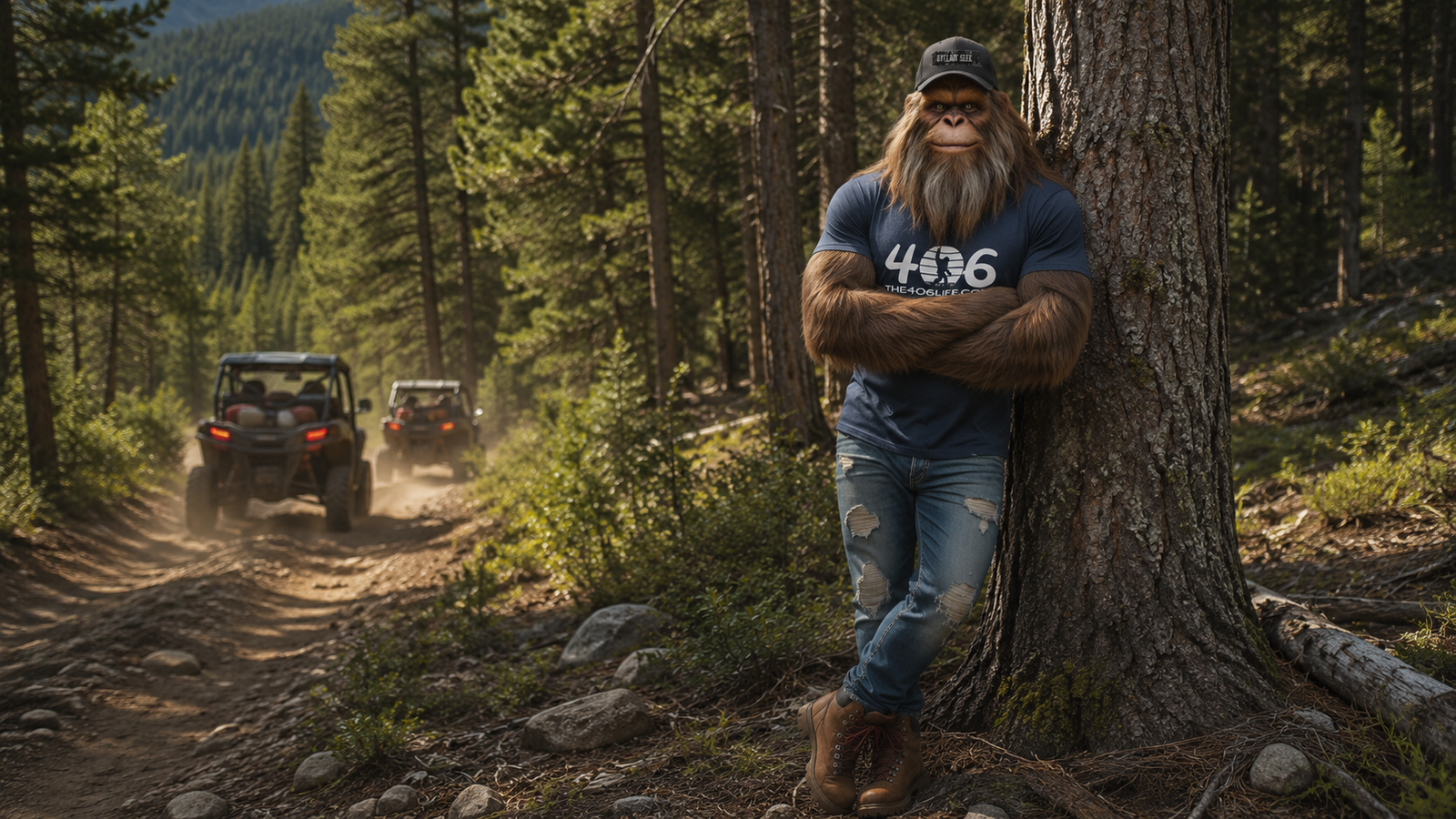
Montana Max, over and out.
Sources & References
- Montana Fish, Wildlife & Parks — OHV Registration & Conservation License (fwp.mt.gov)
- Montana Department of Natural Resources & Conservation — State Trust Land Rules (dnrc.mt.gov)
- Montana Code Annotated — Trespass, OHV, and Stream Access Law (leg.mt.gov)
- Tread Lightly — Motorized Trail Etiquette Principles (treadlightly.org)
- International Mountain Bicycling Association — Trail Etiquette & Yield Rules (imba.com)
- Leave No Trace — Hiker & Trail Etiquette Standards (lnt.org)
1. Motorized & Off-Highway Vehicles (OHV)
Operating an ATV, UTV, or dirt bike on public lands requires specific permits and adherence to noise and environmental restrictions.
- Permits & Decals: If you are a resident, you need a permanent registration decal plus an annual Resident Trail Pass ($20). Nonresidents must purchase a Nonresident Temporary Use Permit ($35). You can buy these directly online via the Montana Fish, Wildlife & Parks Online Licensing Service.
- Where to Ride: To avoid steep fines and trail damage, you must consult a Motor Vehicle Use Map (MVUM). You can check regional trail systems and active alerts on the Montana FWP OHV Activities Page.
- The Golden Rule for Engines: Motorized vehicles must yield to all non-motorized users. When encountering hikers or horses, pull completely over, shut off your engine, and remove your helmet so the horses recognize you as a human and don’t spook.
2. Equestrian & Pack Stock
Horses always have the absolute right-of-way on shared trails, but riders share the responsibility of keeping the routes passable.
- Yield Dynamics: While everyone yields to you, you are legally responsible for controlling your stock at all times.
- Weed-Free Forage: To protect the backcountry from invasive species, Montana requires the use of certified noxious weed-seed-free forage.
- National Forest Rules: For specific camp setups, hitching post availability, and trail-readiness tips, refer to the Kootenai National Forest Horse Riding Guide as a baseline for federal forest lands in the state.
3. Mountain Biking & Cycling
Bikes move fast and quietly, which makes mechanical etiquette critical for avoiding collisions with wildlife and other recreationists.
- The Yield Triangle: Cyclists yield to everyone else on the trail—hikers, runners, and horses. When descending, downhill riders must yield to uphill riders.
- Protect the Dirt: Do not slide, skid, or cut switchbacks. If a trail is muddy enough that your tires leave deep ruts, turn around. For a complete look at sustainable riding rules, see the USA Cycling Mountain Bike Etiquette Guide.
4. Hiking & Foot Traffic
Foot travel gives you access to the deepest parts of the state, but it requires sharp situational awareness.
- Right-of-Way: Hikers yield to horses but have the right-of-way over cyclists. Uphill hikers have the right-of-way over downhill hikers.
- State Park Regulations: For a list of walkable public lands and regional rules regarding footwear, packing out waste, and local map resources, check the Montana FWP Hiking Activities Page.
5. Universal Safety: Wildlife & Bear Country
No matter how you travel, you are sharing space with apex predators.
Critical Safety Rule: Never run or mountain bike at high speeds through low-visibility, high-density bear habitats. Surprising a bear at close range is the leading cause of defensive attacks.
- Bear Spray: Carry EPA-approved bear spray on your person (not inside your pack or buried in an OHV cargo box) and know how to flip the safety clip.
- The Yield Triangle Summary:
   [Horses / Pack Stock]  <-- Highest Priority (Everyone yields to them)
            ^
            |
   [Hikers / Runners]     <-- Yields to horses; receives yield from bikes/OHVs
            ^
            |
   [Mountain Bikers]      <-- Yields to horses and hikers
            ^
            |
   [OHVs / Motorized]     <-- Yields to ALL non-motorized traffic
- Multi-Use Stewardship: For a deep dive into sharing public lands without causing user conflict or environmental degradation, read the Leave No Trace Multi-Use Trail Principles.
Leave a Reply
You must be logged in to post a comment.