
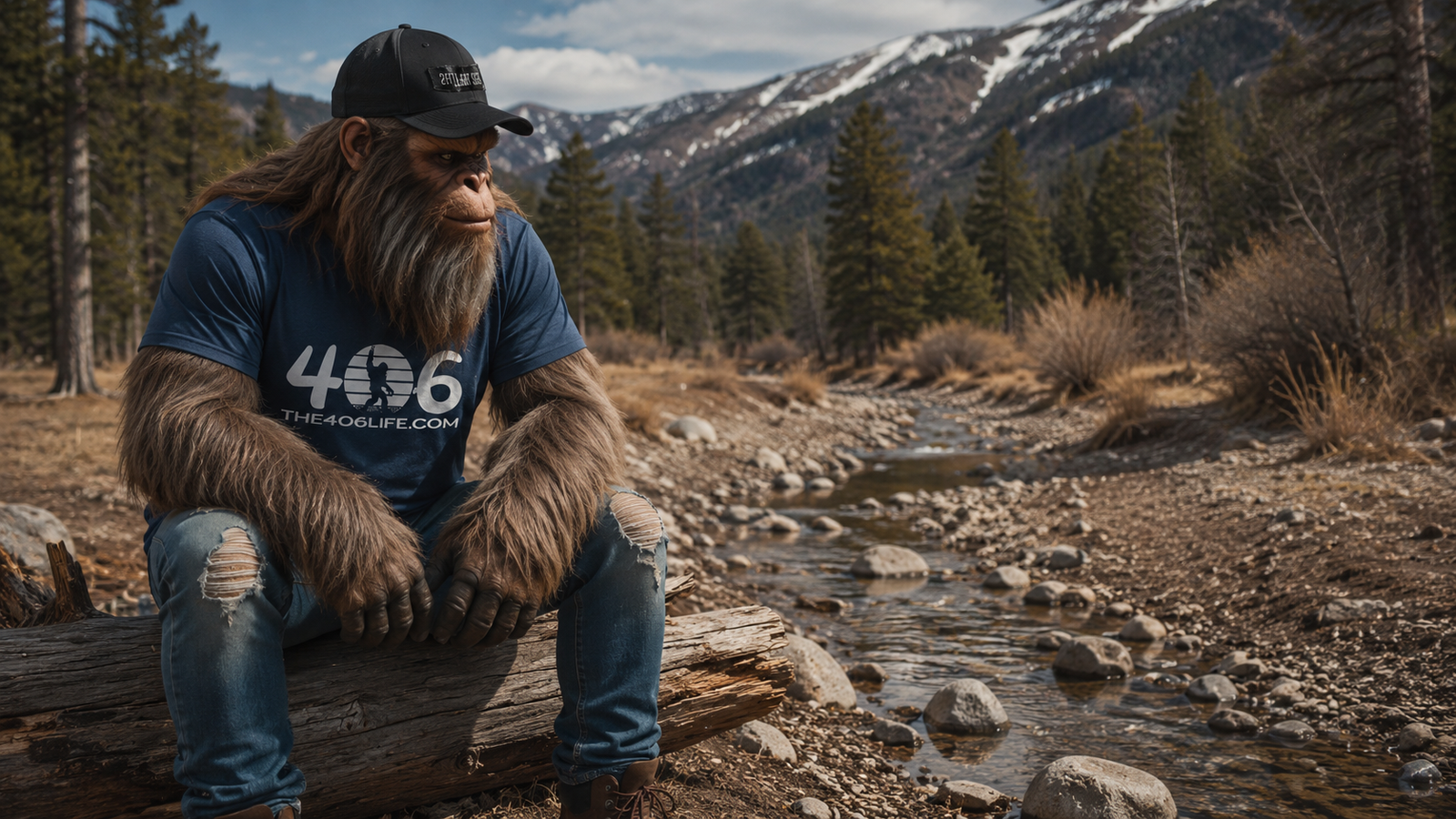
Montana’s Wildest Spring in Recent Memory — And I Watched All of It
The snow melted early, the rivers ran fast and then low, the birds came in by the hundreds of thousands, and the mud… well. The mud was something else entirely.
Now I don’t rattle easy. Centuries of wanderin’ these mountains will do that to a fella — you stop bein’ surprised by much. But I’ll tell you something: the spring of 2026 gave even me pause.
It wasn’t one big dramatic moment. It was more like watching someone do a magic trick where they pull the tablecloth too fast. Everything was still there — the mountains, the rivers, the wildlife — but the timing was all off. The snow went early. The runoff ran flat. The birds showed up ahead of schedule. And the mud? Good lord. The mud was practically a fifth season all by itself.
This is my field report. I’ve walked it, watched it, sniffed the wind, and listened to enough chatter to give you the full picture. Not just what made it onto the tourism posters. All of it — the beautiful parts and the parts that’ll ruin your truck’s undercarriage.
“I’ve seen a lot of springs in this state. Some gentle, some mean. This one was fast. Real fast. Like the season itself had somewhere to be.”
01. The Winter That Wasn’t — And the Spring That Came Running
Let’s start at the beginning, because understanding what happened this spring means understanding the winter before it. And the short version is this: it was warm. Warmer than it should have been. Warm in a way that mattered.
Libby recorded its warmest winter on record — a mean temperature of 33.7°F, which is 4.7°F above the historical average. West Glacier ran similar numbers. Kalispell logged its fourth-warmest winter season. That might not sound dramatic on paper, but in practice it means one thing: precipitation that should’ve stacked up as mountain snowpack fell mostly as rain instead.
Then February hit with that famous shot of warm weather. On February 5th alone, seventeen Montana weather stations broke daily temperature records. Great Falls reached 71°F. In February. I was comfortable that day, and I don’t exactly run cold.
By late March, a full-on heatwave pushed temps into the high 60s in the northwest and low 80s on the eastern plains. Low-elevation snowpack — anything below about 6,500 feet — melted out roughly a month earlier than normal. By April 1st, forty-one snow monitoring stations had already gone bare. Earliest dates on record for many of them.
“February wasn’t winter. It was a warm handshake from spring, three months too early. The snow didn’t know what to do with itself. Neither did the elk.”
Now there was a late twist. On May 20th, a strong late-season storm came through and dumped over a foot of heavy, wet snow across higher mountain corridors. Didn’t touch the valleys — but it slowed things down up high, which helped hold off early wildfire risk for a little while. The state’s been in abnormal dry or drought conditions for six straight years. One snowstorm doesn’t fix that kind of deficit.
- Six consecutive years of abnormal dry or drought conditions across Montana
- Flathead River Basin snowpack: 117% of normal on March 31 — dropped to 89% by April 8
- Sun-Teton-Marias Basin: 138% of normal on March 31 — fell to 83% by April 8
- Forty-one snow monitoring stations fully melted out by April 1
02. Mud Season: Montana’s Most Honest Welcome
Here’s something the travel brochures won’t tell you: spring in Montana isn’t just green meadows and wildflowers. Before the pretty part, there’s mud season. And 2026’s mud season was a legitimate force of nature.
When that much snowpack melts that fast, it has to go somewhere. And until the ground thaws deep enough to absorb it, it just sits. On the trails. On the forest roads. On the lower half of your truck door.
Unpaved Forest Service roads in spring require high-clearance, four-wheel-drive vehicles. Not a suggestion. If you pull up in a standard sedan with good intentions, you’ll need a tow truck and a story to tell at dinner. Many trailheads also remain blocked by fallen trees from severe winter windstorms — call ahead before you drive out.
Expect mud on low-elevation trails well into late June. Expect standing water at trailheads. Expect clay that grabs your boot heel and doesn’t let go without an argument. High-altitude mountain passes? Still buried in unstable, avalanche-prone snow well into June. These aren’t conditions to push through on a whim.
“I’ve navigated these woods for centuries. Even I picked my routes carefully this spring. There’s no shame in takin’ the long way around a puddle that’s deeper than your knee.”
The good news: once the mud clears, the trails that emerge from it are spectacular. The wildflowers push through hard after a wet early season, and the views from high country are worth every sloppy step it takes to get there. You just have to earn it first.
03. Rivers, Runoff, and the Fly Fishing Window You Shouldn’t Miss
Montana’s rivers did something unusual this spring. Instead of the typical late-May surge — that wall of cold, muddy snowmelt that makes rivers unfishable for weeks — most systems ran a slower, flatter, earlier curve. The early melt spread the runoff out over a longer window instead of dumping it all at once. And that changed everything for anglers.
Most systems are projected to clear and drop by Memorial Day weekend. For fly fishing, that is early. That is a gift. But it comes with a cost: rivers that clear out fast in May run low and warm by July, and that means fish-killing heat stress later in the season.
“The fishing window opened early and it’ll close early. If you’re a Montana angler and you’re waiting on July — you might be waiting too long.”
River-by-River Breakdown
| River | Spring Outlook | Projected Restrictions |
|---|---|---|
| Lower Madison | Highly productive through early June | Hoot owl restrictions likely by late June; full closures possible early July |
| Gallatin | High and turbid in May (1,320 CFS); excellent clarity expected June | Hoot owl restrictions below Gallatin Gateway by July 20 |
| Yellowstone (MT) | Prime windows in June and early July | Hoot owl restrictions late July through Labor Day |
| Jefferson System | Not recommended this season | Full closures expected by July 20 (Big Hole, lower Ruby, Beaverhead) |
| Upper Clark Fork | 90–110% of median streamflow — bright spot | Possible late-summer restrictions; monitor conditions |
| Firehole & Gibbon (YNP) | Exceptional spring fishing, opened May 1 | Highly vulnerable to heat; closures expected by late June |
- Mother’s Day Weekend: Residents and non-residents fish any public waters in Montana without a license
- Father’s Day Weekend — June 20–21, 2026: Same deal. No license required for anyone
- Yellowstone Park-wide season opens: Saturday, May 23, 2026
What to Use in High, Turbid Water
When rivers are running swift and off-color — which much of May looked like — trout move off the main current and hold in the soft water. Inside bends. Back eddies. Side channels. The seams where fast water meets slow.
Heavy nymph rigs and large, dark streamers work best. Think black, brown, and olive stonefly patterns. High-visibility worm patterns. You want contrast and weight. A 6-weight rod with ample split shot, a large strike indicator, and — critically — studded wading boots and a wading staff. Spring runoff doesn’t care how experienced you are. Respect the water.
“I’ve watched good anglers get humbled by a river they’d fished a hundred times. Spring changes the rules. Best fly fishermen I’ve ever seen worked the soft edges and let the big current be someone else’s problem.”
White-Water Rafting: Go Now, Not Later
For rafters, the compressed runoff window is both good news and bad. The good news: world-class white water is active right now. The Alberton Gorge on the Clark Fork. The Yellowstone near Gardiner. The Gallatin near Bozeman. The Middle and North Forks of the Flathead near Columbia Falls — all running hard.
The bad news: this window closes fast. Plan for late May or early June. By late summer, flows will drop significantly and the prime rafting opportunities will be gone.
04. Glacier National Park: Big Policy Changes for 2026
Glacier had a complicated spring. The plowing crews made good early progress on the lower sections of Going-to-the-Sun Road — the mild winter helped there. But high up near Logan Pass, things got messy.
A major avalanche buried a masonry restroom facility at Big Bend and swept away the vehicle barrier poles. Winter windstorms downed thousands of trees. A rockfall destroyed a 135-foot section of historic stone wall along a stretch called “the Slopes,” which had to be replaced with concrete jersey barriers. The mountain doesn’t stay still just because humans built something on it.
“I’ve watched those plowing crews work that road for years. They’re tougher than they look. But even they’ll tell you — above the Big Drift, the mountain’s still runnin’ the show.”
New Rules You Need to Know Before You Go
- Vehicle reservations are gone. The pilot reservation system (2021–2025) has been discontinued. Enter through any entrance, any time, no advance permit needed.
- Logan Pass now has a 3-hour parking limit. Strict enforcement. Plan accordingly — you have time for the Hidden Lake Overlook trail (3 miles), but not an all-day sit.
- Logan Pass Express Shuttle is now ticketed. Reserve in advance at Recreation.gov for a $1.00 processing fee. Designed for Highline Trail hikers.
- No shuttles during the spring hiker/biker season. If you’re cycling the GTSR, you’re self-sufficient. Bring repair kits, spare tubes, food, water, and warm layers.
- Trail of the Cedars and Avalanche Lake not on the shuttle route in 2026. Arrange your own transport or get there early.
- Lodging deal: Book any Glacier Park Collection lodge by May 31, 2026, and get 20% off stays between May 1 and July 1.
Going-to-the-Sun Road: Know the Landmarks
If you’re cycling or hiking the road before it opens to vehicles, here’s a quick reference for the key landmarks on the west side approach:
- 7 miles: Red Rock Point — early season turnaround for many; scenic pullout
- 13 miles: West Side Tunnel — historic masonry; often clear by late April
- 13.5 miles: The Loop — major hairpin; common spring biking limit during plowing operations
- 18 miles: Weeping Wall — spring runoff drips directly onto the road surface
- 18.5 miles: Big Bend — site of the 2026 avalanche
- 21 miles: Logan Pass — summit of the Continental Divide at 6,646 feet
- 22 miles: The Big Drift — 50 to 80 feet of wind-packed snow; the final plowing challenge
05. Freezout Lake: 300,000 Birds and a Sound Like a Freight Train
I want to tell you about something that happens every spring in Teton County that most people outside Montana have never heard of. And it is, without question, one of the most spectacular wildlife events in North America.
Freezout Lake Wildlife Management Area sits between Fairfield and Choteau on U.S. Highway 89. It’s a 12,000-acre prairie wetland, and every spring, it becomes a temporary home to migrating waterfowl heading north along the Pacific Flyway — from California’s Central Valley all the way up to arctic breeding grounds in Canada.
In 2026, the first confirmed flocks arrived March 9 — about 5,400 light geese. By the next day, 11,400. By mid-to-late March, concentrations were hitting 45,000 to 52,000 birds daily. Total seasonal count: approximately 300,000 snow geese and Ross’s geese, plus over 10,000 tundra swans.
“When those geese lift off at sunrise, all hundred thousand at once — it sounds like a hurricane mixed with a freight train. I’ve heard a lot of things in my years. That one still gets me.”
The sunrise blast-off is the moment everybody comes for. At first light, the roosting geese lift off the water in one coordinated wave to head for the surrounding barley and wheat fields. A wall of white wings rising off a prairie wetland against the Rocky Mountain Front. If that doesn’t move you, I’m not sure what will.
- Montana Conservation License required: $8.00 for residents, $10.00 for non-residents
- Stay in or near your vehicle on designated gravel roads — flushing the roost forces birds to burn critical energy reserves they need for their journey north
- Wild Wings Festival: March 20–22, 2026 — photography workshops, guided tours, educational programming
- Light Goose Conservation Order in effect: no daily bag limits, electronic calls permitted, unplugged shotguns legal. Requires valid Conservation License and federal Migratory Bird Stamp
- Also watch for golden eagles riding thermal updrafts along the Rocky Mountain Front — what biologists call an “eagle highway”
“I’ve stood on that flat prairie in March and watched the sky turn white. Not a cloud — birds. If you’ve never seen it, you owe yourself the trip.”
06. Red Dogs, Grizzlies, and the Wildflower Parade
Bison Calving Season
In the Greater Yellowstone Ecosystem, spring calving season begins mid-to-late April and runs into May. Newborn bison calves weigh between 30 and 70 pounds at birth, and they come out with a bright, reddish-orange coat that’s earned them the nickname “red dogs.” The first red dog of 2026 was documented April 18th in the Mammoth Hot Springs area.
Within two to three hours of birth, a calf is on its feet and keeping pace with the herd. Peak viewing is in the Lamar and Hayden valleys. Legal requirement: stay at least 25 yards from bison and elk, 100 yards from bears and wolves. A protective bison cow can hit 35 miles per hour. That is not a gap you want to test.
“Watched a tour group creep too close to a cow and her calf once. They made it. But I wouldn’t call that a plan. Give ’em the distance. The view’s still worth it from 25 yards.”
Worth noting: Yellowstone is continuing its Bison Conservation Transfer Program in 2026, working with federal and tribal partners to relocate approximately 100 brucellosis-free bison annually to Tribal Nations in Wyoming and the surrounding region — restoring these animals to sovereign tribal lands rather than sending them to slaughter. It’s meaningful work with deep roots in Native American history with the animal.
Grizzly Bear Activity
Grizzlies emerge from their dens between March and April having lost 15 to 30 percent of their body weight. Sows often emerge with newborn twin or triplet cubs. In that state, they are hungry and unpredictable. Bear spray is not optional in grizzly country. Know how to use it before you need it.
Grizzly mating season peaks in mid-June, which makes spring a high-activity period for territorial movement and bear-human encounters. Stay alert. Make noise on trails. Don’t surprise anyone — two-legged or four-legged.
The Wildflower Progression
Spring’s wildflower bloom moves up the mountain in stages, starting low in late April and reaching the alpine meadows by July and August:
- Late April – May (lower elevations): Pasque flowers, prairie smoke, yellow glacier lilies, low woods strawberries
- June (valley floors and benches): Arrowleaf balsamroot, dark purple larkspur, spring beauties, bluebells
- Late June – July (subalpine): Purple lupine, bear grass, Indian paintbrush, pink sticky geraniums
- July – August (alpine, above treeline): Pink monkey flowers, elephant’s head, white phlox, blue sky pilot — Beehive Basin near Big Sky hosts nearly 300 plant species
07. Spring Events Worth Putting on Your Calendar
Montana’s spring event calendar runs from late April straight into summer, and there’s enough variety that just about anybody can find their crowd. Music, rodeos, craft beer, equestrian shows, marathons, yoga on the Front — it’s a full season.
“The Augusta Rodeo’s been runnin’ longer than most towns in this state have had electricity. That’s not a knock — that’s a compliment. Some traditions earn their place.”
08. What to Wear: The Three-Layer System and Why Cotton Will Betray You
Montana spring weather operates on its own schedule, and that schedule includes dropping from 65°F to below freezing in a matter of hours. I’ve watched it happen. I’ve watched unprepared people stand in the middle of it looking confused.
The technical layering system isn’t overkill. It’s the baseline.
| Layer | Materials | Function & Notes |
|---|---|---|
| Base Layer | Merino wool or high-grade synthetic polyester | Wicks moisture away from skin. Never cotton. Cotton retains moisture and accelerates heat loss. It’s not a fabric — it’s a hypothermia risk in spring mountain conditions. |
| Mid Layer | High-loft fleece or mid-weight merino | Traps body heat. Fleece dries fast; wool insulates even when damp. Either works — both beat a hooded sweatshirt when conditions shift. |
| Outer Shell | Waterproof, windproof, breathable membrane | Your armor against rain, sleet, and wet spring snow. DWR coatings degrade with mud and dirt — wash your shell regularly to maintain performance. |
| Footwear | Mid-to-high waterproof boots with aggressive Vibram outsoles | Ankle support on uneven, slippery terrain. Pack microspikes for icy sections at elevation. Treat leather with water-repelling conditioner before you go. |
When you return from a muddy backcountry day: wash vehicle undercarriages to remove abrasive clay, dry tents completely before storage, brush and wash boots, and apply leather conditioner. Mud left to dry and crack shortens gear life significantly.
09. Hot Springs: Where to Soak When You’re Tired of Being Cold
If there’s one Montana tradition perfectly suited to mud season, it’s geothermal soaking. After a long day on a wet trail or a rough drive on a clay road, sliding into a hot mineral pool is about as close to heaven as a person can get.
One important note for 2026 planning: Chico Hot Springs in Paradise Valley is closed for renovations from late March through mid-May 2026. It’s been a centerpiece of Montana’s hot springs culture since 1900, so that closure has nudged some folks toward alternatives — which, it turns out, are excellent.
“I’ve never been a hot springs kind of creature myself — I run naturally warm — but I’ve seen enough grateful, mud-covered hikers emerge from those pools looking like entirely different people. There’s something to it.”
Frequently Asked Questions
- USDA NRCS Montana SNOTEL Snow Survey Data
- U.S. Drought Monitor — Montana Conditions
- Glacier National Park — Going-to-the-Sun Road Opening Updates
- Glacier National Park — Visitor Services & Shuttle Information
- Recreation.gov — Logan Pass Express Shuttle Ticketing
- Montana Fish, Wildlife & Parks — Fishing Regulations & Free Fishing Weekends
- Montana FWP — Black Bear Hunting Regulations & Conservation Order
- Freezout Lake Wildlife Management Area — Montana FWP
- Montana Tourism — 2026 Spring Events Calendar
- Yellowstone National Park — Bison Conservation Transfer Program
- Montana 511 — Real-Time Road Conditions
Wanna keep up with Montana Max and the wild ride that is The 406 Life? Follow us on Instagram for daily snapshots of Big Sky livin’, and join our Facebook crew—both the main page and the group—for local biz shoutouts, behind-the-scenes shenanigans, and real-deal Montana grit. Whether you’re scrollin’ from the mountains or missin’ ‘em from afar, we’ve got a seat ’round the digital campfire waitin’ for ya.
And don’t forget to roam through our blog, where Montana Max dishes out tales from the trail, cultural deep-dives, and a whole lotta backwoods wisdom.
Leave a Reply
You must be logged in to post a comment.